
You’ve probably spotted the term “wholegrain” on supermarket shelves, in recipes, or in healthy eating advice. You might also have noticed that Nature Valley Crunchy Bars are made with wholegrain oats – but what does wholegrain actually mean?
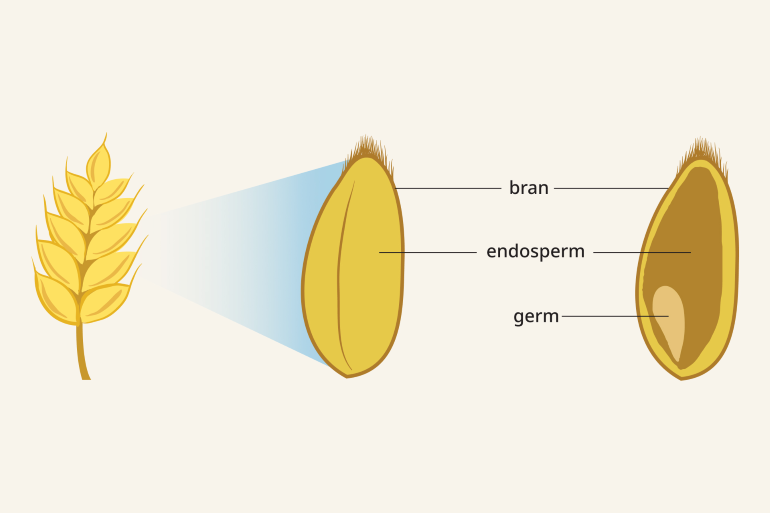
Wholegrain foods are made from grains that keep their complete, natural structure intact. Grains are the edible seeds of grasses grown for food. Each grain – sometimes called a kernel – naturally contains three distinct parts. When all three parts remain together, the grain is considered a whole-grain.
These three parts are:
- Bran – the outer layer
- Germ – the nutrient rich inner core
- Endosperm – the starchy centre
Types of Grains
Grains are a staple in many diets, forming the base of foods like bread, pasta, rice and cereals. However, not all grains are nutritionally equal – the way they’re processed can impact their fibre and overall health benefits.
Grain based foods are typically grouped into four main types:
- Whole-grains – contain all three parts of the grain (bran, germ and endosperm)
- Refined grains – have the bran and germ removed for a finer texture and longer shelf life
- Enriched grains – refined grains where some nutrients are added back after processing
- Fortified grains – grains with additional nutrients added that are not naturally present
Examples of Wholegrain Foods
Whole-grains appear in many everyday foods. Common examples include:
- Brown rice
- Oats and porridge
- Whole wheat bread
- Wholegrain pasta
- Barley
- Rye
- Quinoa
- Wholegrain breakfast cereals
Thanks to their versatility, whole-grains can be enjoyed at any time – whether it’s breakfast, lunch, dinner, or as part of a snack.
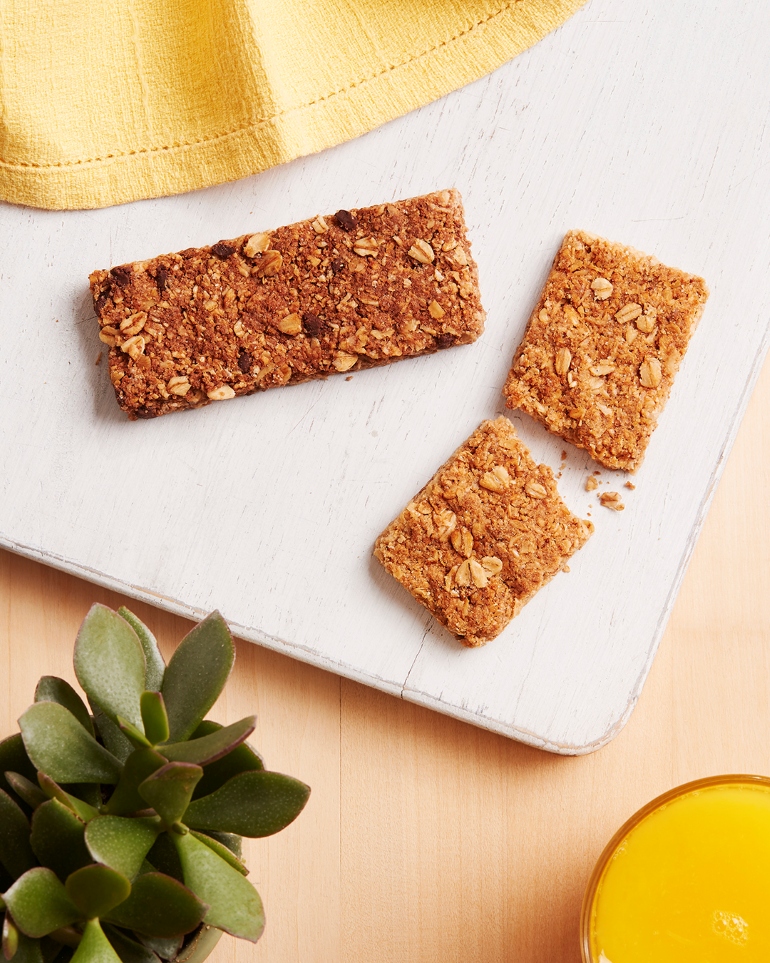
For a convenient option on the go, Nature Valley Crunchy Bars are made with 100% whole grain oats, offering a simple way to add more whole-grains to your day.
What’s the Difference Between Whole-Grains and Refined Grains?
Understanding what wholegrain foods are becoming clearer when comparing them to refined grains. The key difference lies in which parts of the grain are retained.
| Ingredient | Whole-Grain | Refined Grain |
| Bran | ✔ | ✘ |
| Germ | ✔ | ✘ |
| Endosperm | ✔ | ✔ |
Refined grains remove the bran and germ, which changes the nutritional profile and texture of the final product.

Benefits of Whole-Grains
While everyone has unique dietary needs, wholegrains are widely recommended as part of a balanced and healthy diet.
Whole-grains are recognised as an important dietary component because they contain the entire grain kernel – including the bran, germ and endosperm – meaning they provide fibre, vitamins, minerals and beneficial plant compounds that are often lost during processing.
Below are some of the key health benefits associated with including wholegrain foods in your diet.
Whole-Grains Naturally Contain Fibre
Because the bran layer remains intact, wholegrains naturally contain dietary fibre. In the UK, the NHS recommends that adults aim for 30g of fibre per day as part of a balanced diet. Including wholegrain foods can help contribute towards this target.
Whole-Grains Retain Naturally Occurring Nutrients
Whole-grains keep the germ and bran layers, which contain vitamins and minerals including B vitamins, magnesium and potassium.
Whole-Grains Can Support Long-Term Health
Research has linked regular consumption of a diet high in a reduced risk of several long-term health conditions, including type 2 diabetes, cardiovascular disease and certain cancers.
For further reading on health research, visit the Whole Grain Initiative.
Whole-Grains Can Help Support Healthy Weight Management
Wholegrain foods are rich in fibre, which can help you feel fuller for longer because they’re digested more slowly by the body. Discover more about high-fibre foods support fullness in research from Imperial College London.
Wholegrains Support Variety in Meals
From warm bowls of porridge to grain-based salads or wholegrain snack bars, wholegrains offer many ways to add texture and variety to everyday meals.

How to Spot Wholegrain Foods
When shopping for whole-grain products, here are 5 simple tips can help you make the right choice:
-
- Look for the world “whole” before the grain name in the ingredients list (for example, whole wheat or wholegrain).
- Check that a whole-grain appears among the first ingredients listed, which indicates it makes up a significant portion of the product.
- Look for packaging claims like “wholegrain”, “wholemeal”, or “100% whole wheat”.
- Remember not to rely on colour alone – brown bread isn’t always whole-grain.
- Be cautious with terms like “multigrain”, which simply means multiple grains are used and doesn’t guarantee they are whole grains.
We recommend checking the ingredients list to be sure.
Easy Ways to Add Wholegrains to Everyday Meals
Adding whole-grain foods to your routine doesn’t need to be complicated. Simple swaps can make a difference. For example, choosing wholegrain bread instead of white bread or switching white rice for brown rice are easy changes that fit into familiar meals.
Starting the day with oats or wholegrain cereal is another straightforward way to include whole-grain foods at breakfast. You could also experiment with ingredients like barley or quinoa in salads, soups or grain bowls to add variety in both texture and flavour.
Snacking is another great way to enjoy whole-grain foods between meals. Our Nature Valley Crunchy bars are made with 100% whole grain oats, making the perfect wholegrain snack for on the go.
Frequently Asked Questions
What is the recommended daily fibre intake?
The NHS recommends that adults aim to consume 30g of fibre per day as part of a balanced diet. You can learn more about fibre recommendations from the NHS guidance on healthy eating.
What are examples of wholegrain breakfasts?
Wholegrain breakfasts can include porridge made with oats or barley, wholegrain cereals, or grain-based dishes made with wholegrain bread.
Explore our recipes for wholegrain breakfast and snacking options.
What are the health benefits of whole-grain?
Whole grain are an important part of a balanced diet because they provide dietary fibre along with vitamins, minerals and plant compounds that occur naturally within the grain.
When eaten as part of a balanced diet, whole-grain foods provide carbohydrates for energy and small amounts of healthy fats. They are also rich in dietary fibre, which helps slow digestion and the absorption of carbohydrates, supporting more stable blood sugar.
How whole-grains support bowel health?
Whole-grain foods are rich in dietary fibre, which supports healthy digestion and bowel function. Fibre adds bulk to stools and helps them move through the digestive system more easily, promoting regular bowel movements and helping to prevent constipation.
Can whole grain support weight management?
Including wholegrains as part of a healthy, balanced diet can help with healthy weight maintenance. Their fibre content can help you feel fuller for longer, which may reduce overall calorie intake over time. Evidence suggests that people who eat wholegrains regularly tend to have lower body weight and lower body mass indices compared with those who eat fewer whole-grain foods.
For more information on whole-grain and weight management, visit The British Dietetic Association.
How do whole-grains benefit gut health?
Whole-grain contain types of dietary fibre that support healthy digestion. Some fibre provides a food source for “friendly” gut bacteria, leading to production of metabolic by-products that can protect the gut lining and promote a healthy microbiome. This can help with regular bowel movements and overall gut function.
For more information on whole-grain and weight management, visit The British Dietetic Association.
Can whole grains help support heart health?
Whole-grains are often included in heart-healthy eating guidance and are closely associated with positive dietary patterns linked to cardiovascular health. You can find more information about heart health and diet from the British Heart Foundation.