
For something so important, fibre doesn’t always get the credit it deserves. But like protein and vitamins, it’s just as much a part of eating well. Whether you’re fuelling for a morning walk or packing snacks for a day outdoors, fibre is quietly doing important work in your body – particularly when it comes to digestion. Below, we break down what fibre is, how much fibre you need for digestive health, and simple ways to work more foods high in fibre into everyday eating with Nature Valley.
What Is Fibre and Why Does It Matter?
Fibre is a carbohydrate that occurs naturally in plants. What sets it apart from other carbs is that your body can’t fully digest it – most of it stays intact as it travels through your gut, where it helps keep things moving normally. Both the NHS and the British Dietetic Association (BDA) list fibre as a core part of a balanced diet, right alongside protein, fats and everything else on your plate.
There are two main types of fibre – soluble and insoluble – and most plant foods contain a mix of both. Soluble fibre dissolves in water, while insoluble fibre adds bulk to stool and helps move food through the gut. And because most plant-based foods contain both types of fibre, eating a variety of them is the simplest way to get a good mix of each in your diet.
How Much Fibre Do Adults Need a Day?
In the UK, government guidelines put the target of daily fibre needs at 30g for adults and children over 16, dropping to lower amounts for younger children as they grow. This recommendation comes from the NHS, and is the same number you will see quoted by the Scientific Advisory Committee on Nutrition (SACN) and the BDA.

Are You Getting Enough Fibre?
Most of us fall short of the 30g target. National Diet Survey (NDNS) data consistently show that UK adults eat well below the 30g target across virtually every age bracket. Industry-wide data collected in 2023 by National Diet and Nutrition Survey puts the figure starkly, with just 4% of UK adults currently meeting the 30g target.
But closing that gap doesn’t need to mean a complete overhaul of how you eat. Instead, small, regular swaps towards plant-based, fibre-rich foods can help move the average in the right direction.
High-Fibre Choices: What Foods Support a Balanced Diet?
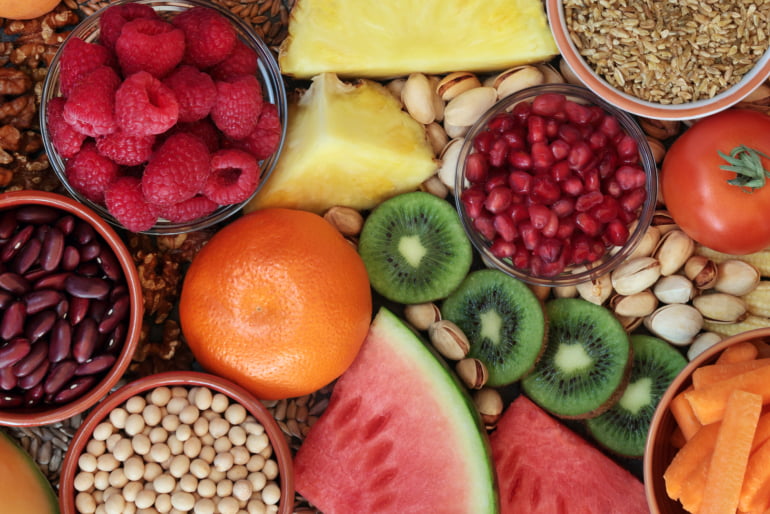
Fibre is found across a wide range of plant-based foods, so there are plenty of ways to work more of it into meals and snacks throughout the day. That includes:
-
- Wholegrains – such as oats, wholemeal bread, wholegrain pasta and brown rice.
- Fruit – such as berries, apples, pears, and plums with their edible skins on.
- Vegetables – including potatoes with their skins left on.
- Beans and pulses – like lentils, chickpeas and kidney beans.
- Nuts and seeds.
Checking the nutrition label on packaged foods is an easy way to see how much fibre a product contains per serving. Wholegrains are worth calling out here in particular, as research consistently links higher wholegrain intake with better overall diet quality, including higher fibre intake.
Nature Valley Options with Fibre
If you’re looking for a wholegrain snack to reach for, here are some great options in the Nature Valley range:
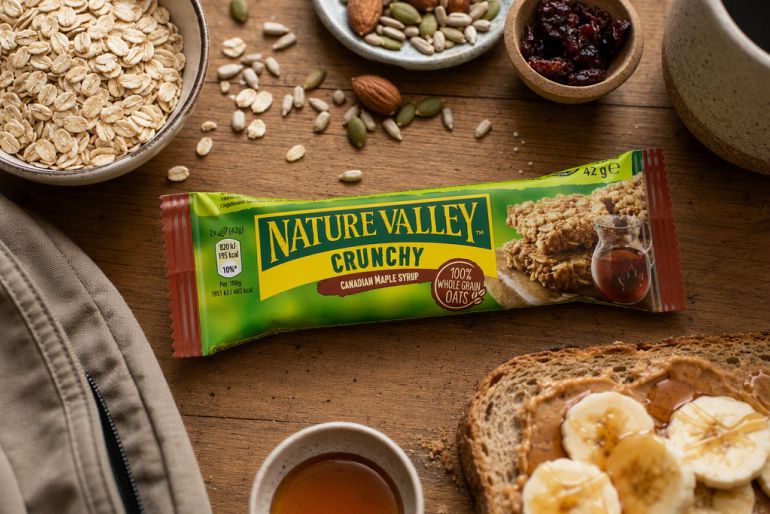
- Nature Valley Crunchy Oats & Honey bars are made with 100% wholegrain oats and contain 2.7g of fibre per 2-bar serving (42g).
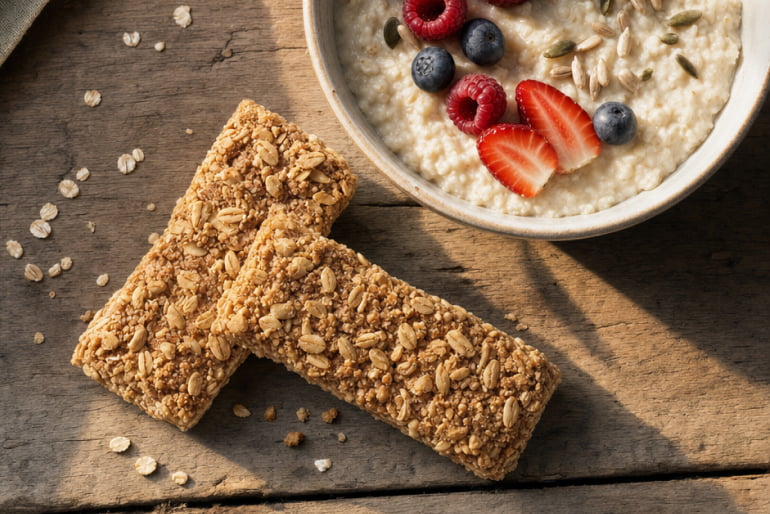
- Nature Valley Crunchy + Fibre bars, in Cocoa & Hazelnut Flavour and Apple & Cinnamon Flavour, are made with wholegrain oats and corn fibre. They have approximately 3g of fibre per bar.
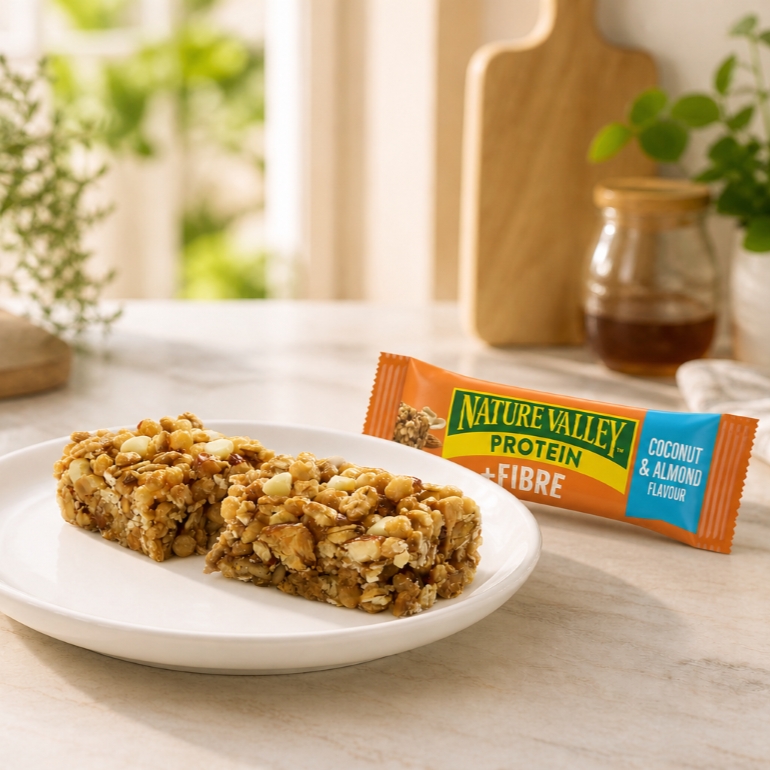
- Nature Valley Protein + Fibre bars, in Chocolate & Orange Flavour and Coconut & Almond Flavour, are made with roasted peanuts, almonds, sunflower seeds and oligofructose, which help contribute around 6g of fibre per bar.
How Does Fibre Support Digestion?
According to BDA, Fibre can play a well-established role to improve constipation. As it moves through your digestive system largely unbroken, it adds bulk and helps move food through the gut, supporting regular bowel function.
Gut function is clearly something people are already thinking about, because a 2025 University of Glasgow study found that 86% of UK adults surveyed had experienced a gut symptom, such as bloating or flatulence, in the past month – reinforcing why digestive function is such a widely relevant topic.
Easy Ways to Add More Fibre to Your Day
Adding more fibre to your routine doesn’t have to be complicated. Alongside keeping active and staying hydrated, a few simple, everyday swaps can help keep your digestion on track:
- Choose wholemeal or wholegrain bread, pasta and rice instead of white or refined versions.
- Start the day with oats or a wholegrain cereal.
- Add beans, lentils or extra vegetables to meals you already make, like soups, salads and pasta dishes.
- Keep the edible skins on fruit and vegetables where you can.
- Reach for a wholegrain snack when you’re on the go, between meals or heading out for a walk.
According to the BDA, eating foods high in fibre can play an important role in supporting normal bowel function which helps to improves digestion. So whether you’re on the go or simply looking for an afternoon snack, reach for a fibre-filled treat with Nature Valley’s Crunchy + Fibre snack bars when you need a convenient, high-fibre snack.
Frequently Asked Questions
How much fibre do adults need a day?
Adults and children over 16 are recommended to eat at least 30g of fibre a day, according to UK government guidelines (SACN). You can find more detail on fibre recommendations from the NHS.
Why is fibre important in the diet?
Fibre supports normal digestion and bowel function and is recognised as part of a balanced, healthy diet. It’s found naturally across a wide range of plant-based foods, including wholegrains, fruit and vegetables.
What foods are a source of fibre?
Wholegrains, fruit, vegetables, beans, pulses, nuts and seeds are all good plant-based sources of fibre. Eating a variety helps you get a mix of both soluble and insoluble fibre.
Does fibre help digestion?
Yes – research suggests fibre can play a recognised role in supporting normal bowel function and improving constipation.
How does fibre support the gut function?
Fibre supports normal bowel function because it adds bulk. This bulk improves gut function enabling food to pass through the gut better. As it passes, it is fermented and healthy bacteria in areas like the large intestine are activated which is commonly linked to more positive overall digestion.