
Whether you’re comparing snack bars in the supermarket or checking the back of a pack at home, you may have noticed the “of which sugars” line on the nutrition panel.
Sugar is one part of the nutritional information you may want to consider, but it is not the only one. To understand a snack bar more fully, it helps to look at the nutrition panel, the ingredient list, the serving size and your overall diet together.
Here’s a simple guide to understanding sugar on UK snack bar labels.
What is sugar?
Sugar is a type of carbohydrate that provides energy. There are several types of sugar, including:
- Glucose and fructose, which join together to make sucrose — the sugar commonly used in baking or added to tea and coffee.
- Lactose, the sugar naturally present in milk.
- Maltose, a sugar naturally found in cereal grains.
- Fructose, a sugar found in whole fruits and vegetables.
Sugars can occur naturally in foods, such as the sugars found in fruit and milk, or they can be added to foods and drinks during production.
What does “of which sugars” mean on a UK nutrition label?
The “of which sugars” figure shows the total amount of sugars in the product from all sources. This can include naturally occurring sugars, such as those found in fruit or milk, as well as additional sugars from ingredients such as sugar and honey.
UK nutrition labels do not usually show a separate figure for “added sugars”. To understand where the sugars come from, check the ingredient list alongside the nutrition panel. Looking at both together gives you more context when comparing snack bars.
Guidance on Sugar Consumption
Government guidance recommends that no more than 5% of daily calories should come from free sugars, the equivalent of 30g a day for adults. This includes sugars added to foods and drinks, as well as naturally occurring sugars in some ingredients such as honey, syrups and fruit purées.
These are daily guidelines, not targets for an individual snack. Remember that the “of which sugars” number on a UK label shows total sugars, both those inherent to some ingredients and those which have been added to the recipe.
Why is it useful to think about sugar intake?
Sugar-containing foods and drinks contribute to overall calorie intake. Consuming more calories than your body needs over a long period can contribute to weight gain, which is associated with a number of health conditions (SACN’s evidence review).
High sugar consumption can also be associated with dental health and can increase the risk of tooth decay (SACN’s recommendations).
It’s important to balance sugar intakes within the whole diet. When thinking about your diet, it’s important to focus on the nutrient density of foods and the diet as a whole, looking at contribution of positive nutrients. Whole fruit, for example, comes with fibre, vitamins and minerals, making it a useful part of a varied diet. NHS guidance supports eating a wide variety of fruit and vegetables as part of a healthy, balanced diet.
How can you understand the sugar in a snack bar?
Start with the nutrition panel. Look at the sugars per 100g if you’re comparing different products, then check the amount per bar to understand what is in the serving you would usually eat.
Next, look at the ingredient list. Ingredients are listed in descending order by weight, so the first few ingredients can give you a quick idea of what makes up most of the bar. The ingredient list can also show whether sugars come from ingredients such as sugar, honey, fruit or other sources.
Recipes vary between ranges and flavours, so the pack is always the best source of current information.
How does sugar contribute to a Nature Valley bar?
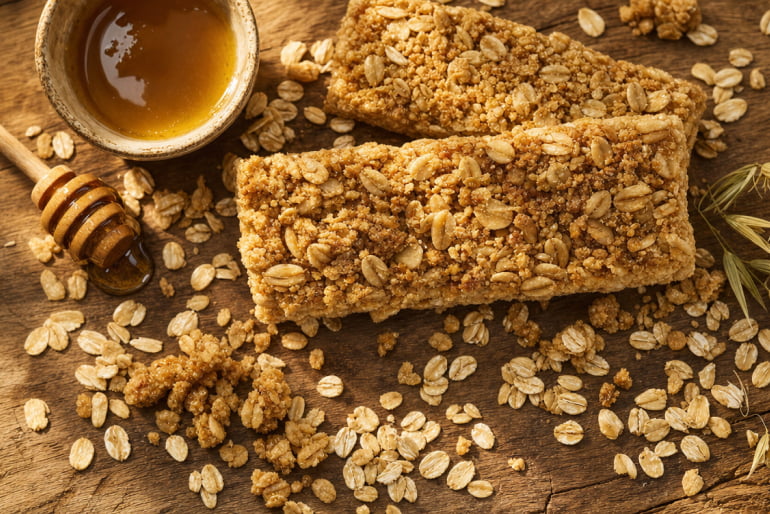
In an oat-based snack bar, sugar can contribute to the sweet taste and help create the distinctive crunch. Other ingredients, such as honey or molasses, can also contribute to flavour, while a small amount of salt can help balance sweetness.
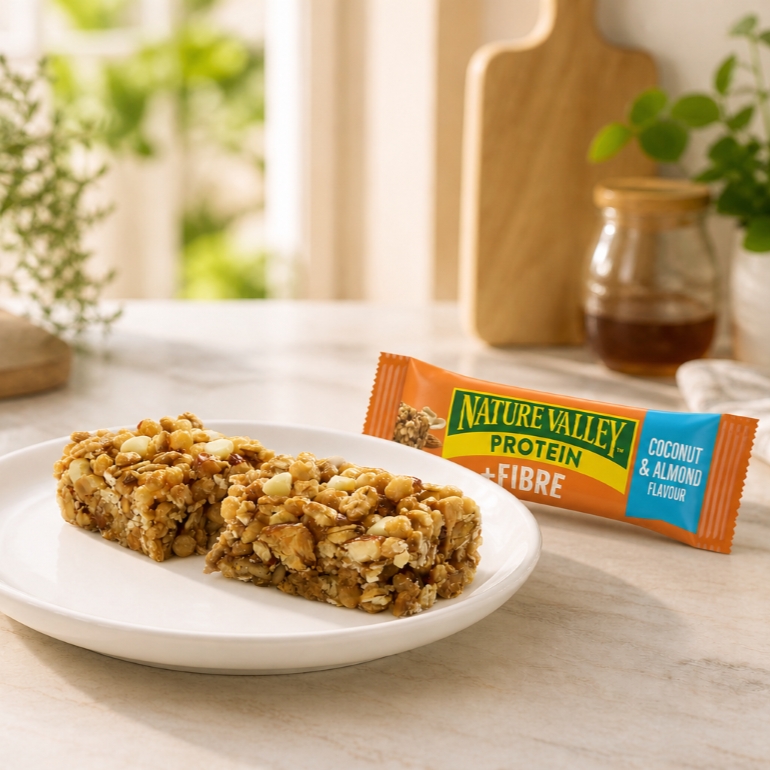
The exact recipe depends on the product and flavour. If you’re looking for a snack option with less sugar, the new Nature Valley Protein + Fibre range have 30% less sugar than the average cereal bar on the market, making them a good option if you’re considering a lower sugar snack. Check the individual pack for the current ingredient list and nutrition information before consuming.
What are sweeteners?
Sweeteners are food additives used, in very small amounts, to give foods and drinks a sweet taste. You may also see terms such as non-sugar sweeteners, low- or no-calorie sweeteners and polyols used in discussions about sweetening additives.
Different sweeteners have different properties and permitted uses (Sweeteners | EFSA).
There is no single answer to whether a product containing sugar or sweeteners is the right choice for everyone. The most useful place to start is the nutrition panel and ingredient list, considered in the context of your overall diet.
Six quick tips for reading sugar information on a snack bar label
- Check “of which sugars”: This shows total sugars from all sources.
- Compare per 100g: This gives you a like-for-like comparison between products of different sizes.
- Check the amount per bar: This shows how much sugar is in the serving you would usually eat.
- Read the ingredient list: Look at the first few ingredients and check where the sugars come from.
- Remember the difference: UK labels show total sugars, while UK dietary guidance discusses free sugars.
- Look at the bigger picture: Consider the whole nutrition panel, the ingredients and your overall diet rather than focusing on one number alone.
FAQs
What is a snack option with lower sugar?
The new Nature Valley Protein + Fibre range have 30% less sugar than the average bar and cereal bar on the market, making them a good option if you’re considering a lower sugar snack. Check the individual pack for the current ingredient list and nutrition information before consuming.
How should I compare sugar levels between snack bars?
Compare similar products using the values per 100g, then check the amount in one bar. It’s also useful to review the ingredient list and consider the product as part of your overall diet.
Should I avoid all foods that contain sugar?
For most people this is not necessary, but the majority of adults do consume more than the government recommended amount. Sugar is an important part of the nutrition information to be aware of, but should be considered within the context of the entire food and your overall diet. Foods such as whole fruit also provide fibre, vitamins and minerals, making them a useful part of a varied and balanced diet.
Do Nature Valley bars contain sugar?
All of our bars contain at least some sugar for flavour and crunch. In an oat-based snack bar, sugar can contribute to the sweet taste and help create the distinctive crunch. Other ingredients, such as honey or molasses, can also contribute to flavour, while a small amount of salt can help balance sweetness. The exact recipe depends on the product and flavour. Check the individual pack for the current ingredient list and nutrition information, including the “of which sugars” figure.
Are sweeteners better or worse than sugar?
There is no simple answer that applies to every product or person. Different sweeteners have different properties and uses, as does sugar which can be added in various quantities, so check the full label and consider the product in context of your overall diet and personal.