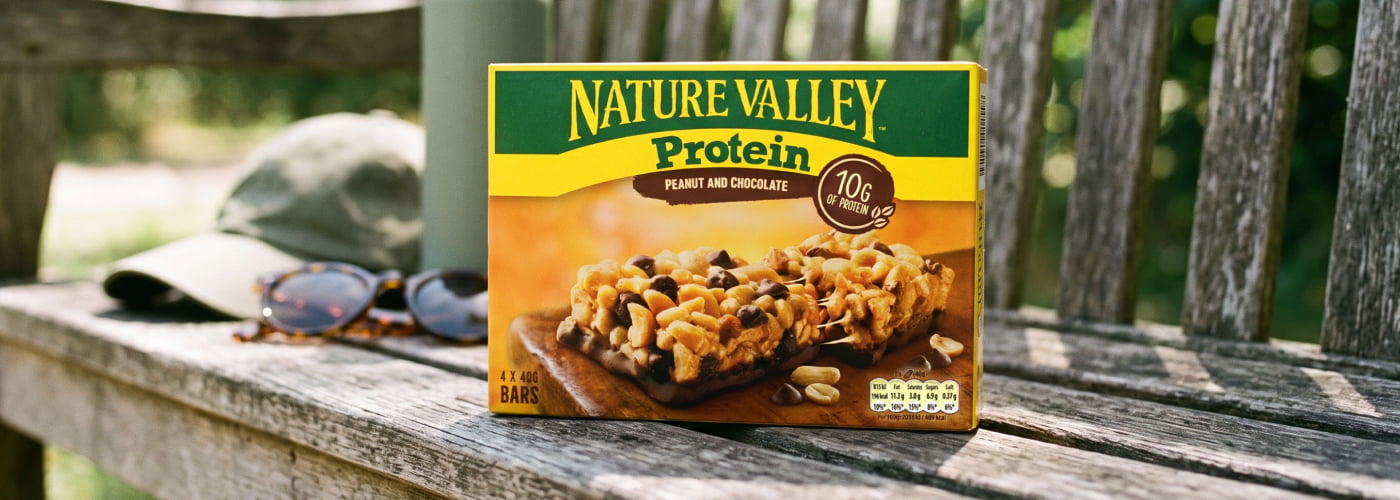
Whether you’re grabbing a snack on your way to work, packing lunch for an adventure or choosing something for an afternoon pick-me-up, you’ve probably found yourself comparing different snack bars labels.
From the ingredient list to the nutrition panel, food labels are designed to help you understand what’s in a product and compare it with others. Once you know what you’re looking for, they’re surprisingly straightforward to read.
Below, we’ll break down how to read a snack bar label and show you how to use the nutrition panel to make informed snack choices.
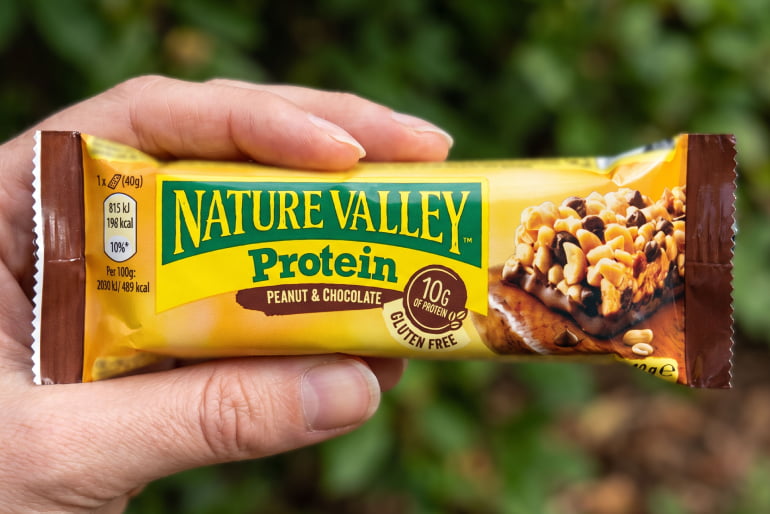
What information can you find on a snack bar label?
Most packaged snack bars include a few key pieces of information:
- A nutrition panel
- An ingredient list
- Allergen information
- Serving size
- Front-of-pack nutrition labels and health claims
Each section gives you a different piece of the puzzle, so it’s worth looking at them together rather than focusing on just one number or claim.
How to read a nutrition panel
If you’ve ever turned over a snack bar and been met with a table of numbers, you’re not alone. The nutrition panel might look technical, but it’s simply a summary of what’s in the product.
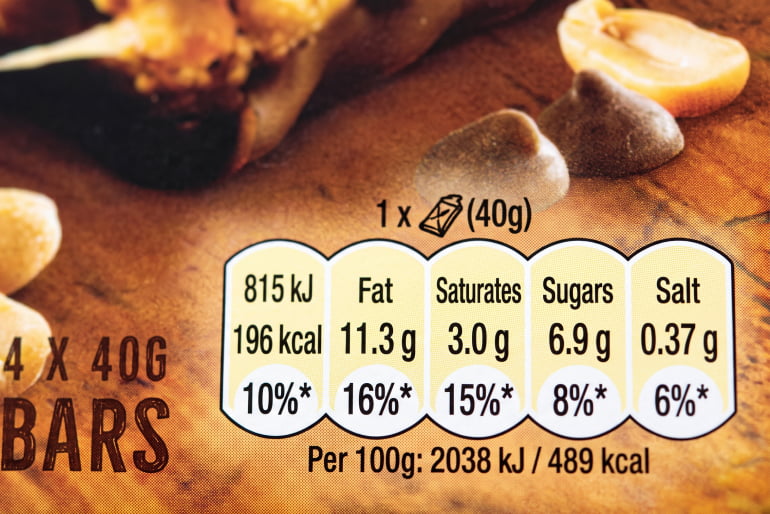
You’ll usually see values shown per 100g and per serving (or per bar). If you’re comparing two snack bars, the per 100g values allow you to compare products on a like for like basis, even if they’re different sizes. The per bar values are useful too, as they show what you’ll get in a typical serving.
| Nutrient | What it tells you | What to look for when comparing snack bars |
| Energy (kJ/kcal) | The amount of energy (calories) the snack bar provides. |
Calories are just one part of the picture and will depend on your personal diet goals. Consider what nutritional value at you’re getting from them, such as whole grains, nuts, seeds, fibre or protein. |
| Fat | The total amount of fat from all ingredients. |
Fat is an part of a balanced diet and can be enjoyed in moderation. When looking at a nutrition label, consider how much fat a food contains and the type of fat it provides. Ingredients such as nuts and seeds are sources of unsaturated fats, which are healthy, essential fats that make up a healthy, balanced diet. |
| Saturates | The amount of saturated fat. |
If you’re comparing similar products, lower saturated fat may be a healthier choice. |
| Carbohydrate | Total carbohydrates, including starches and sugars. |
Carbohydrates provide energy. Looking at the ingredients can help you understand whether they’re coming from whole grains, fruit or other sources. |
| Of which sugars | The total amount of sugars in the product. |
The “of which sugars” figure on UK nutrition labels shows the total amount of sugars from all sources (NHS). This included naturally occurring sugars, such as those found in milk, fruit and vegetables, as well as sugars from ingredients such as sugar and honey. Check the ingredient list alongside the nutrition panel to see where sugars come from. |
| Fibre | Often included to show the amount of dietary fibre. |
Fibre helps support digestion. In the UK, adults are recommended to aim for 30g of fibre a day, and the fibre you get from foods throughout the day contributes towards this target. A product can be labelled a source of fibre if it contains at least 3g per 100g, and high in fibre if it contains at least 6g per 100g. |
| Protein | The amount of protein in the snack bar. |
Protein helps maintain muscle and supports normal bones. Compare products if protein is something you’re looking for, but consider it alongside the rest of the nutrition information. |
| Salt | The total salt content. |
This refers to total salt content of the product. When comparing similar products, it can be useful to look at how much salt you’re getting. In the UK, adults are recommended to have no more than 6g of salt a day (NHS). |
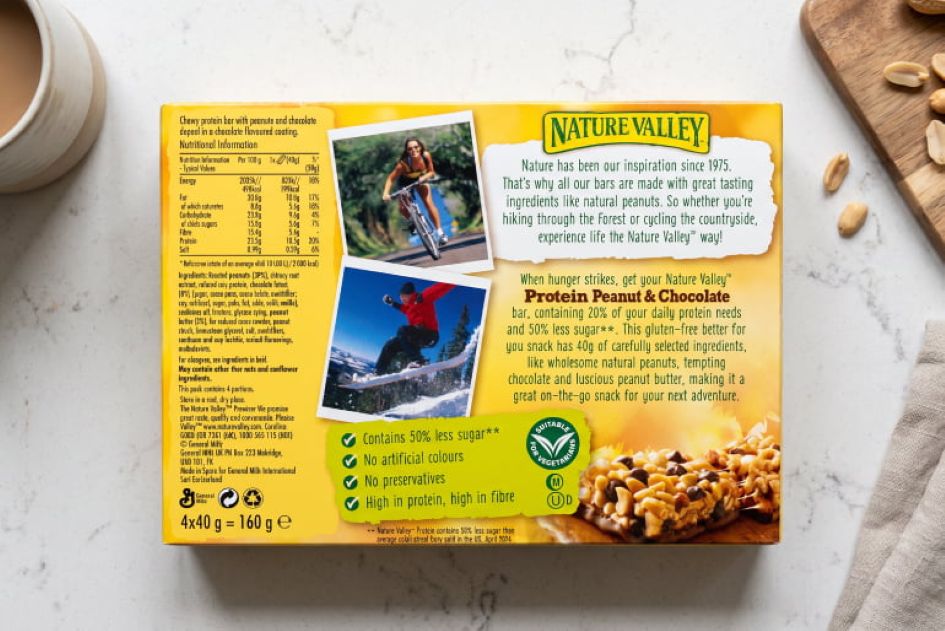
Understanding Sugars on UK Nutrition Labels
On UK labels, you’ll usually see a line that says, “of which sugars”. This shows the total sugars in the product, including both naturally occurring sugars from ingredients like fruit or milk and sugars added during production.
If you’d like to understand where the sugars come from, it’s worth checking the ingredient list alongside the nutrition panel. Looking at both together gives you a clearer picture when comparing snack bars.
How to Read the Ingredient List
The ingredient list shows everything that goes into making a snack bar. Ingredients are listed in descending order by weight, so those used in the greatest amounts appear first.
Take our Nature Valley Crunchy Dark Chocolate Bars as an example. The list starts with wholegrain rolled oats (56%), followed by sugar and sunflower oil. This tells you straight away that wholegrain oats make up the largest part of the recipe. Looking at the first few ingredients can give you a quick idea of what a snack bar is mainly made from.
What about ingredients with names you don’t recognise?
Some ingredient names can sound more complicated than they really are. For example, lecithin is an ingredient that helps keep ingredients mixed together.
Food additives approved for use in the UK go through rigorous safety assessments before they can be used in food. Rather than focusing on whether an ingredient sounds familiar, it’s often more helpful to look at the nutrition information and ingredient list as a whole.
What Do Nutrition Claims Mean?
You might notice claims on the front of a snack bar such as “source of fibre”, “high in fibre” or “source of protein”. These aren’t just marketing phrases – they’re regulated nutrition claims that products can only use if they meet specific criteria (Gov UK)
For example, a product can be labelled:
- Source of fibre if it contains at least 3g of fibre per 100g
- High in fibre if it contains at least 6g of fibre per 100g
These claims listed on the front of packaging are not mandatory so it’s important to check the nutritional panel as well before consuming. The nutrition panel will tell you exactly how much fibre the product contains, making it easier to compare different snack bars.
Six Quick Tips for Reading a Snack Bar Label
Reading a label doesn’t need to take long. Whether you’re picking up a Nature Valley bar or comparing it with another snack, these simple tips make understanding ingredients simple:
- Check the first few ingredients: Ingredients are listed by weight, so the first few give you a quick idea of what makes up most of the bar.
- Check fibre and protein: If these are important to you, compare the amounts on the nutrition panel. Nature Valley has options such as Protein or Protein + Fibre bars so you can choose a bar that fits your goals.
- Look at sugars: Check the “of which sugars” figure alongside the ingredient list to see how much sugar the bar contains. It’s important to remember that some sugars are naturally occurring, and some are added to develop texture and of course, all help with overall sweetness.
- Review the (RI) Reference Intake: some bars will show a % RI. The percentages on the label show how much one serving of the product contributes towards that daily amount. This is a guide to how much energy and key nutrients (fats, saturated fats, salt, sugar and some vitamins and minerals) an average adult should have in a whole day.
- Compare per 100g: This gives you a like-for-like comparison between similar products, regardless of portion size.
- Look at the bigger picture: No single number, snack, product or meal tells you everything. Look at the ingredients and nutrition panel together to understand what you’re getting, and remember that what matters most is your overall diet. It’s okay to enjoy treats in moderation, as long as your overall diet is balanced.
FAQs
How do you read a snack bar nutrition label?
Start by comparing the nutrition information per 100g, then look at the ingredient list, serving size and any front-of-pack nutrition labels to build a fuller picture of the product.
What’s the difference between total sugars and added sugars?
UK nutrition labels show total sugars, which includes all sources of sugars. Added sugars aren’t usually listed in the UK, so checking the ingredient list can provide more context.
How do you read an ingredient list?
Ingredients are listed in descending order by weight, so the first ingredients make up the largest proportion of the recipe.
Why are some Nature Valley ingredients listed in brackets?
Brackets show the ingredients that make up another ingredient. For example, the dark chocolate pieces in Nature Valley Crunchy Dark Chocolate contain cocoa mass, sugar, soy lecithin and natural vanilla flavouring.
Are the ingredients the same in every Nature Valley bar?
No. Ingredients vary between Nature Valley ranges and flavours. For example, Crunchy Dark Chocolate contains dark chocolate pieces and cocoa powder, while Crunchy Canadian Maple Syrup contains Canadian maple syrup. The ingredient list on the pack is always the best source of current information.